WS56 “Data Spaces Beyond the Basics: Toward Operational AI and Robotics” – A Successful Workshop at ERF 2026
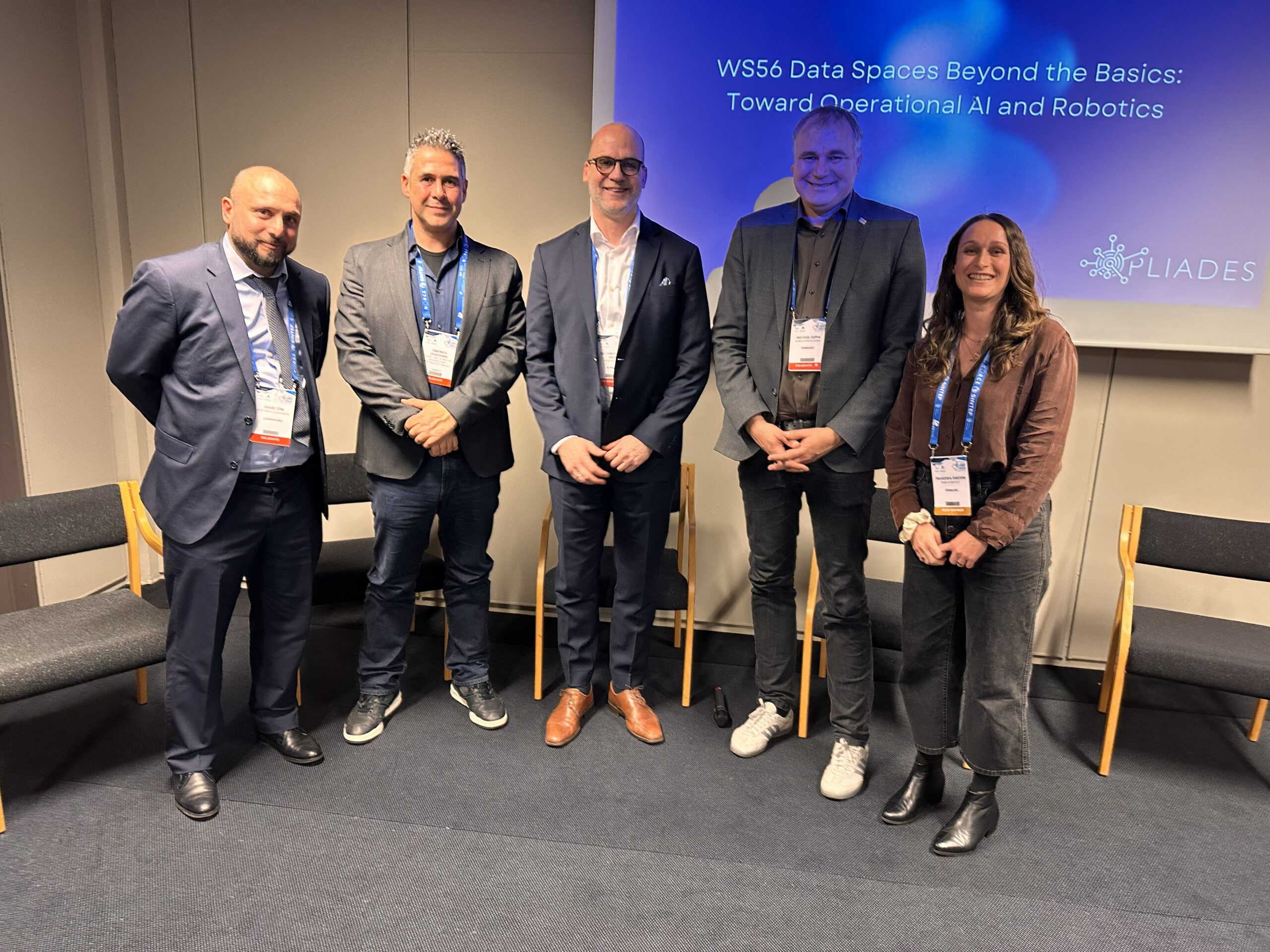
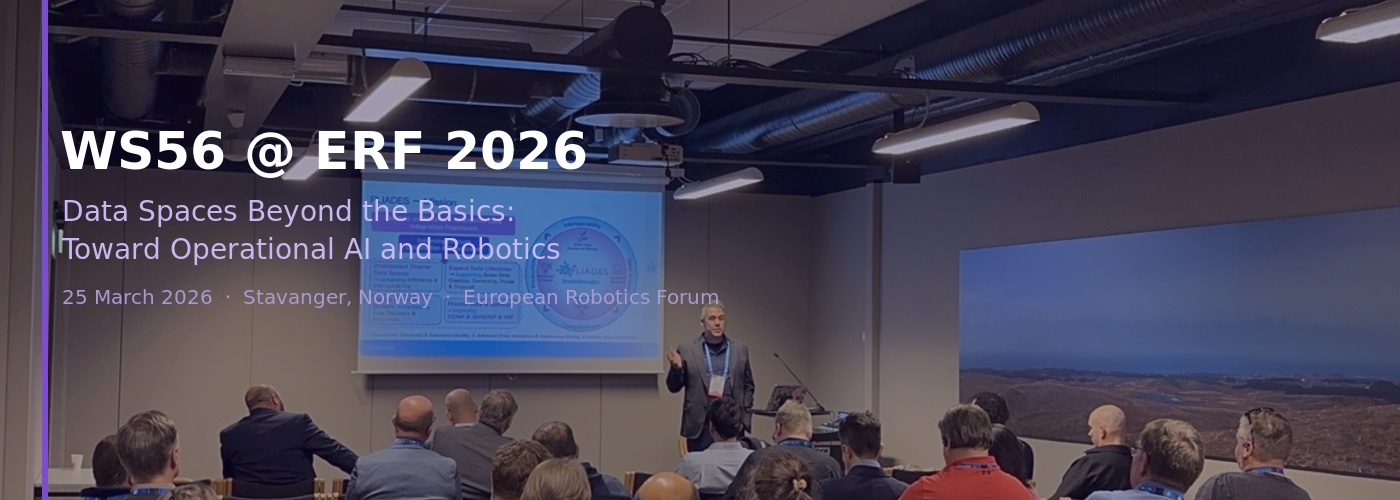
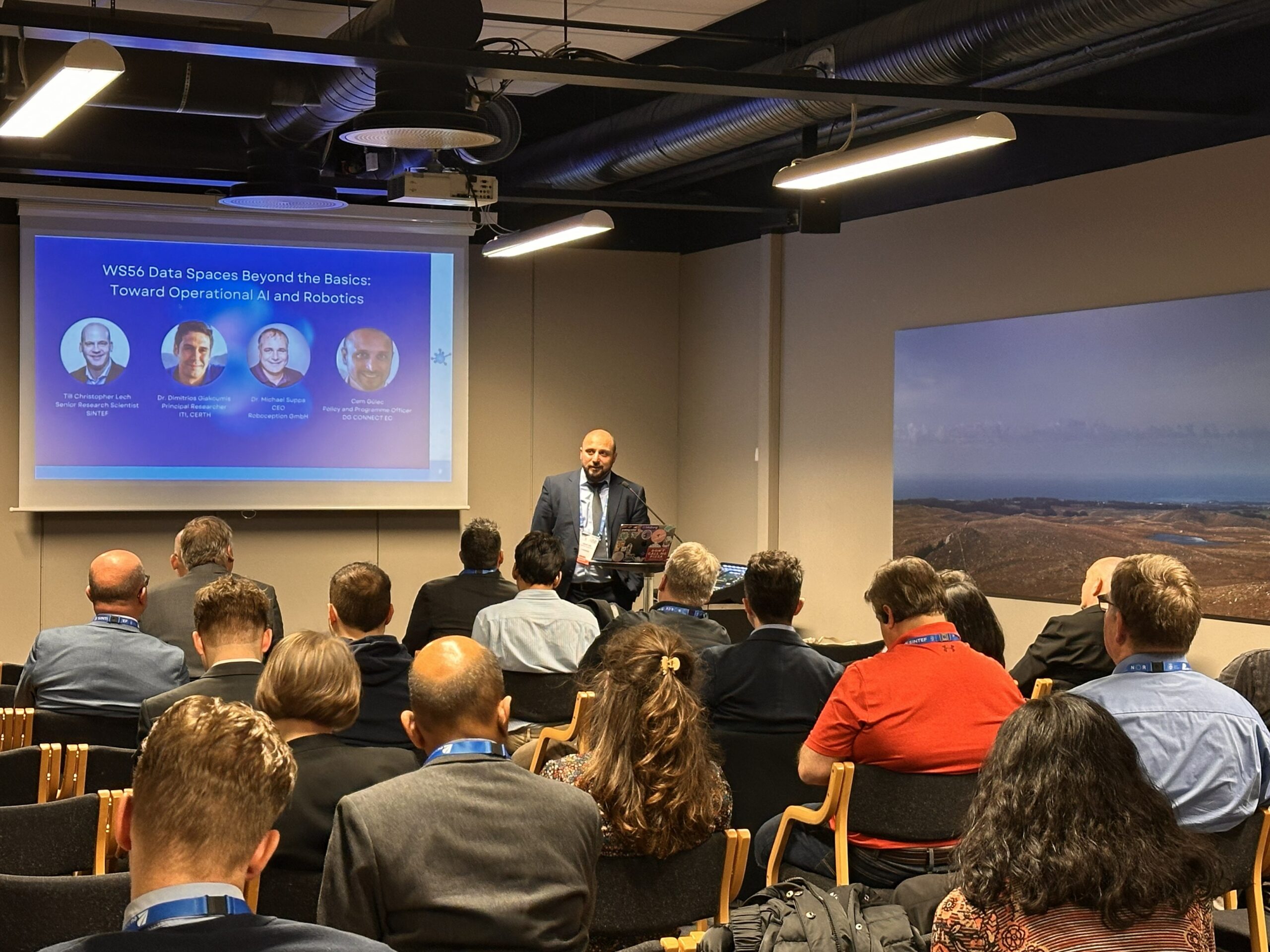
On 25 March 2026, PLIADES co-organised Workshop 56 (WS56) at the European Robotics Forum (ERF) 2026 in Stavanger, Norway. The session brought together researchers, industry practitioners, and policymakers to explore how data spaces are transitioning from concept to real-world deployment in AI and robotics applications.
Workshop overview
Building on the first edition at ERF 2025 – which highlighted the potential of data spaces for AI and robotics – WS56 at ERF 2026 shifted focus to real-world implementation challenges, alignment between technical enablers and market requirements, and concrete actions needed to support more robotics and AI use cases through data spaces.
The session ran from 16:00 to 17:20 and attracted a diverse audience of professionals working across the mobility, healthcare, and industrial domains. An interactive live poll via Mentimeter gave organizers a quick read of the audience’s experience level with data spaces, setting the tone for a discussion that balanced fundamentals with cutting-edge deployment experiences.
| Time | Session |
|---|---|
| 16:00 – 16:15 | Introduction & Overview · Audience Poll · IDSA video on trusted data sharing |
| 16:15 – 16:55 | Keynote talks |
| 16:55 – 17:15 | Panel discussion |
| 17:15 – 17:20 | Conclusions & closing |
Speakers & presentations
Franziska Kirstein – Blue Ocean Robotics
Workshop Chair & Introduction
Till Christopher Lech – SINTEF Digital
Keynote: Framing Dataspaces beyond Robotics
Dr. Dimitrios Giakoumis – CERTH/ITI · PLIADES Coordinator
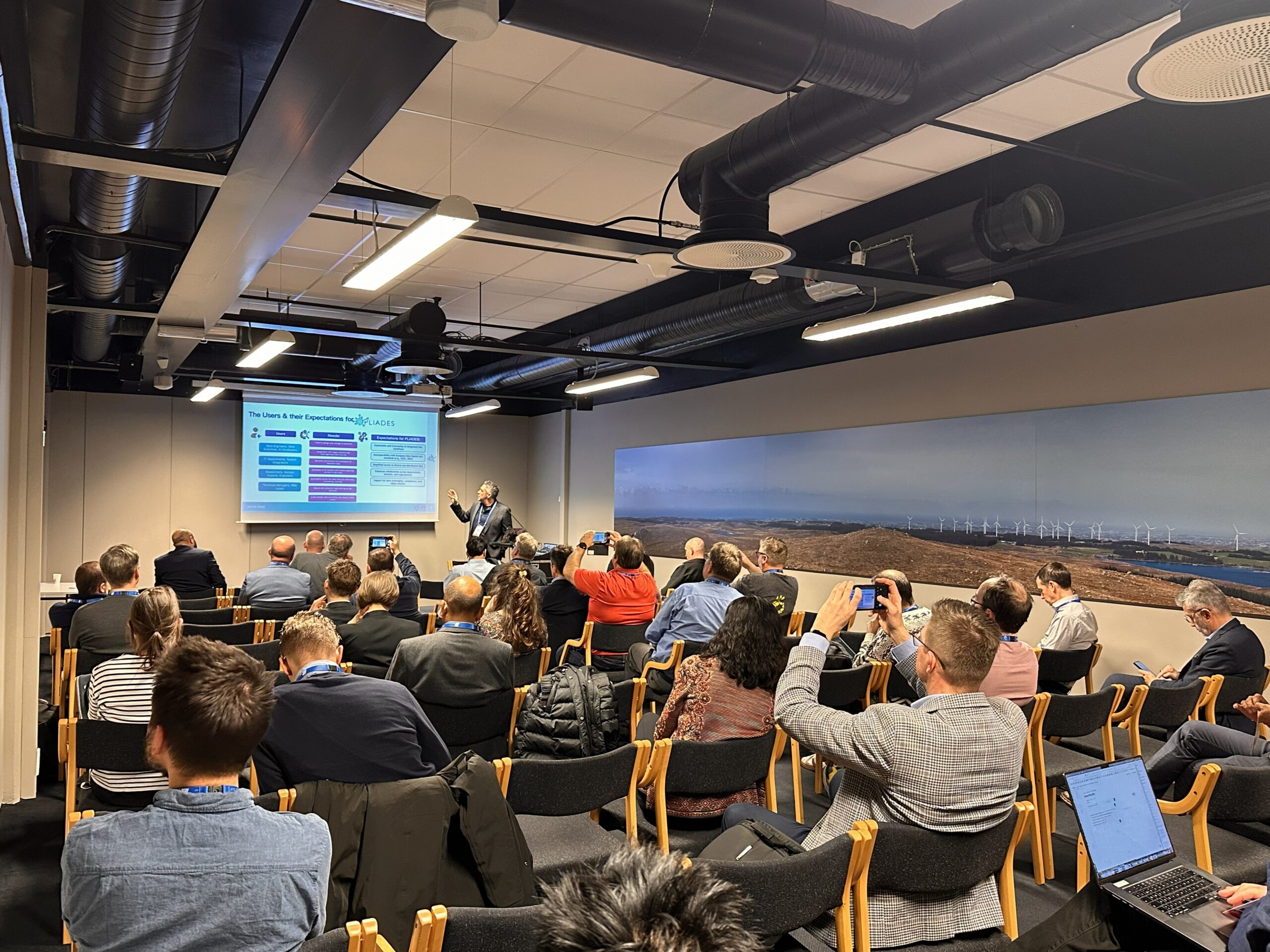
Keynote: PLIADES – AI-Enabled Data Lifecycle Optimisation
Dr. Michael Suppa – Roboception GmbH
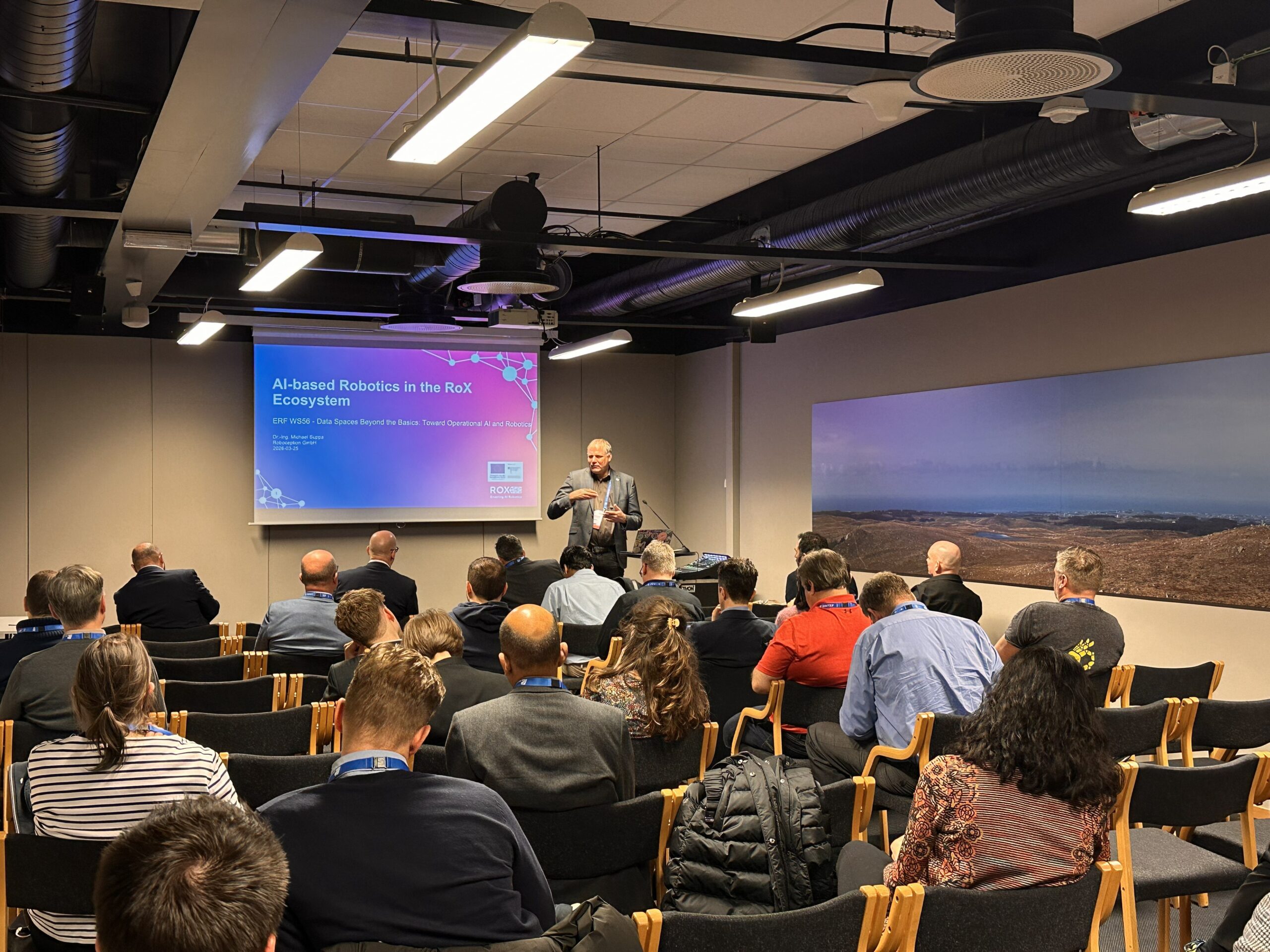
Keynote: AI-based Robotics in the RoX Ecosystem
Cem Gülec – DG CONNECT, European Commission
Panel: Policy & Programme Perspective
Keynote highlights
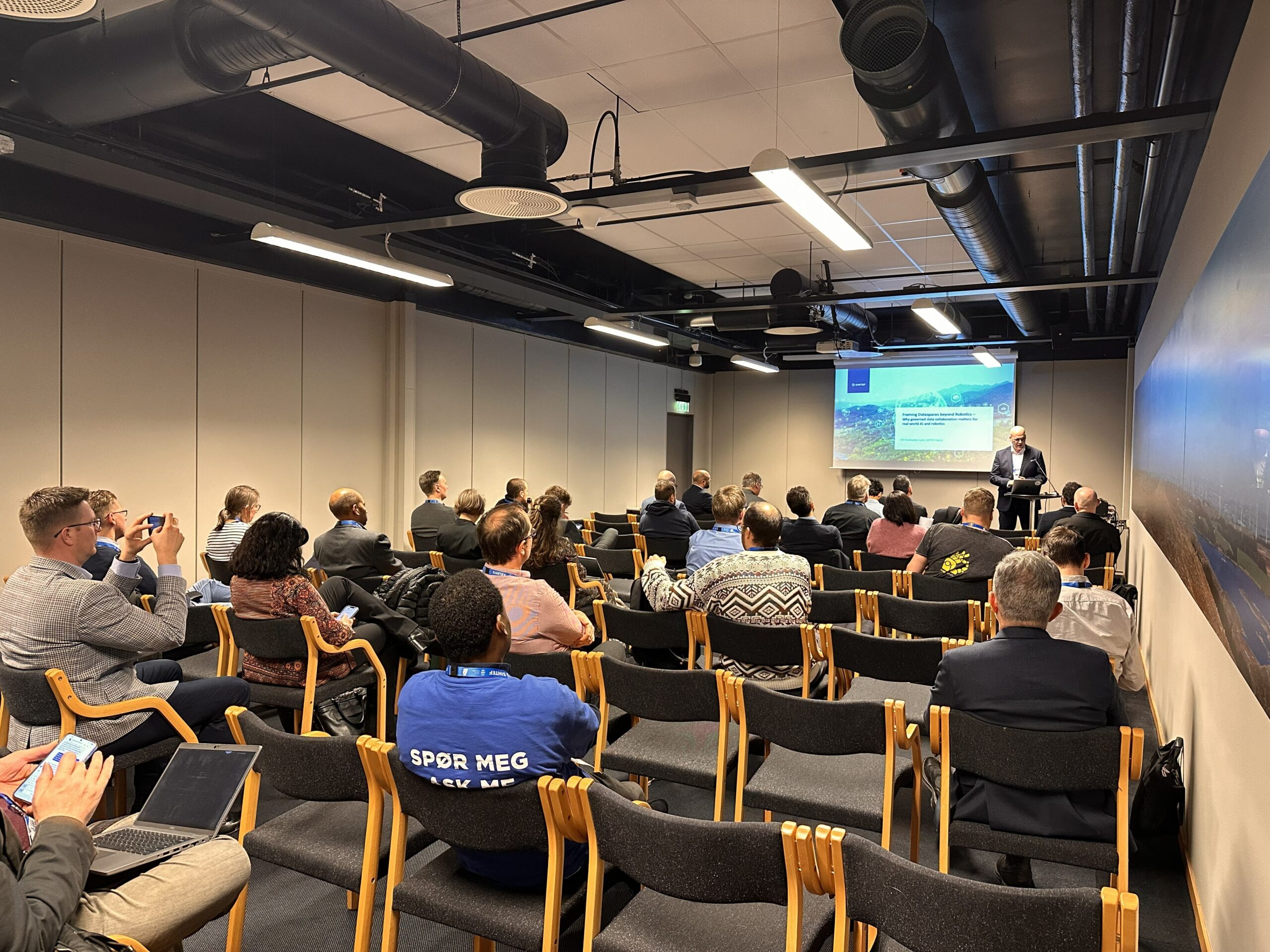
Framing Dataspaces beyond Robotics – Why Governed Data Collaboration Matters
Till Christopher Lech of SINTEF Digital offered a cross-domain perspective, arguing that data spaces are already moving from pilot rhetoric to early operational deployment in industrial, mobility, healthcare, and smart city ecosystems – and that robotics can build on these experiences rather than starting from scratch. He emphasised that the OT-IT gap remains a distinctive barrier for robotics, and that the field must prioritise high-impact use cases with clear value over building infrastructure first. The Oslofjord Scenario (GEO4WATER project) was presented as a compelling example of multi-actor data collaboration driving real-world decisions.
PLIADES: AI-Enabled Data Lifecycle Optimisation & Data Spaces Integration
Dr. Dimitrios Giakoumis presented the PLIADES project (Grant No. 101135988), a Horizon Europe initiative coordinated by CERTH/ITI. PLIADES develops an advanced AI-enabled data integration framework designed to interconnect diverse data spaces across Mobility, Energy, Industry, Healthcare, and Green Deal domains.
AI-based Robotics in the RoX Ecosystem
Dr. Michael Suppa presented the RoX project, a €55 million R&D initiative funded by the German Federal Ministry for Economic Affairs and Energy (BMWE) involving 20+ partners including ABB, Boehringer Ingelheim, DFKI, DLR, Mercedes-Benz, Siemens, and Rheinmetall. RoX focuses on lowering the entry barriers to robot-based automation through AI, with use cases spanning loading & unloading, picking & kitting, production, and commissioning. The ecosystem relies on a decentralised dataspace for sovereign data exchange, with semantic interoperability (AAS, OPC UA, AutomationML, ROS) as a cornerstone. A live demonstration of the “Continuous AI Model Improvement” service – sharing robot perception snapshots across sites via the RoX dataspace connector – illustrated the maturity of the approach.
Panel discussion
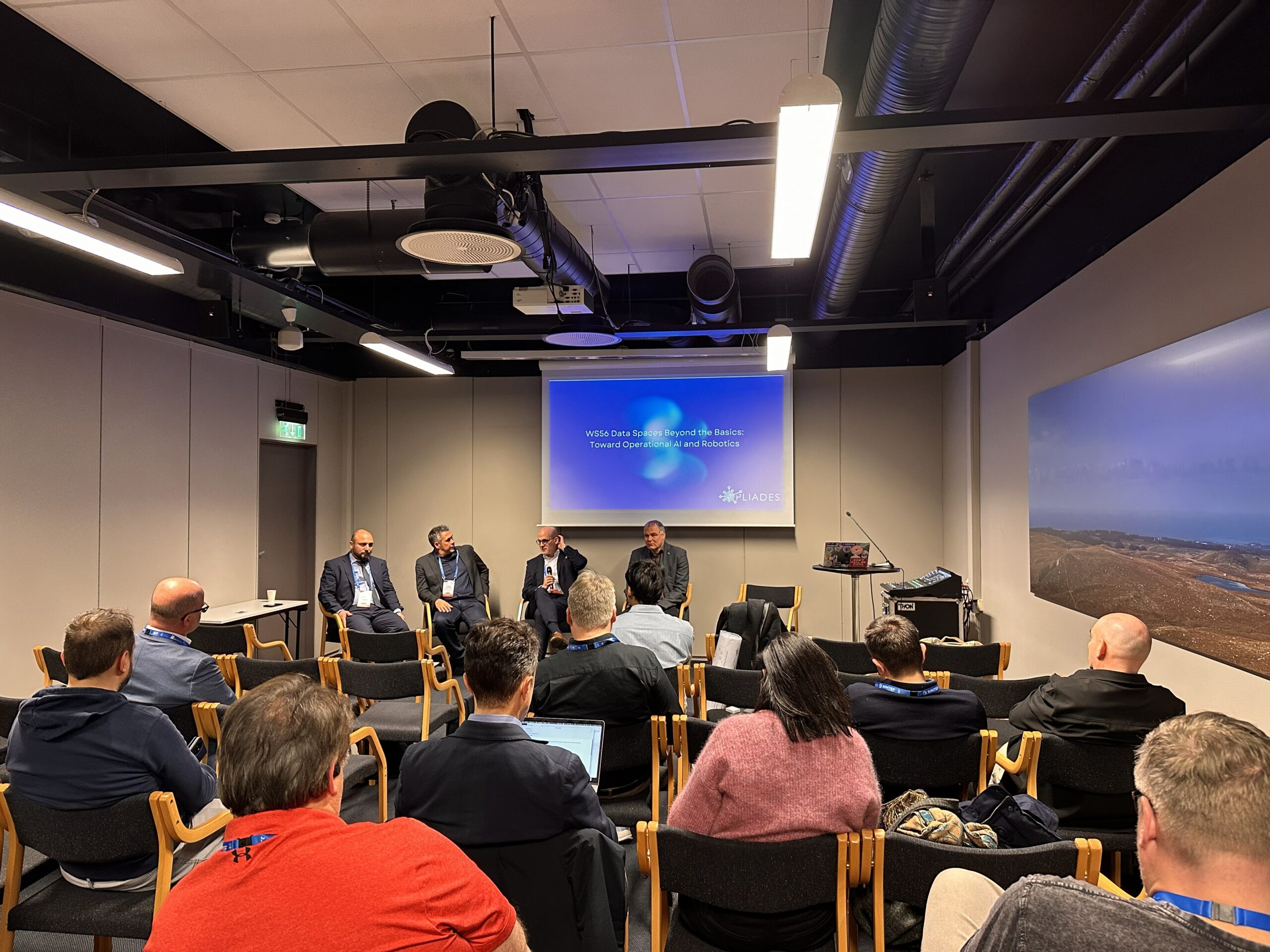
The panel discussion – which ran over its allotted time due to the depth and enthusiasm of audience engagement – brought together all keynote speakers along with Cem Gülec (DG CONNECT, European Commission) to debate three core questions:
-
- How can data spaces accelerate innovation for AI developers, robotics providers, and end-users?
- Which advanced cross-domain applications are emerging through data spaces?
- What are the key AI/robotics-related challenges that must be tackled to fully leverage data spaces in real-world operational environments?
Audience questions reflected a broad range of expertise levels – from those newly encountering the concept to experienced practitioners – underscoring both the growing interest in and the maturity challenges of operational data spaces for robotics.
Workshop presentations
The presentations from WS56 are available for download below:
-
- WS56 Data Spaces Beyond the Basics: Toward Operational AI and Robotics – Introduction presentation
Franziska Kirstein, Blue Ocean Robotics
[Download PDF] - Framing Dataspaces beyond Robotics – Why Governed Data Collaboration Matters for Real-World AI and Robotics
Till Christopher Lech, SINTEF Digital
[Download PDF] - PLIADES – AI-Enabled Data Lifecycle Optimisation & Data Spaces Integration
Dr. Dimitrios Giakoumis, CERTH/ITI
[Download PDF] - AI-based Robotics in the RoX Ecosystem
Dr. Michael Suppa, Roboception GmbH
[Download PDF]