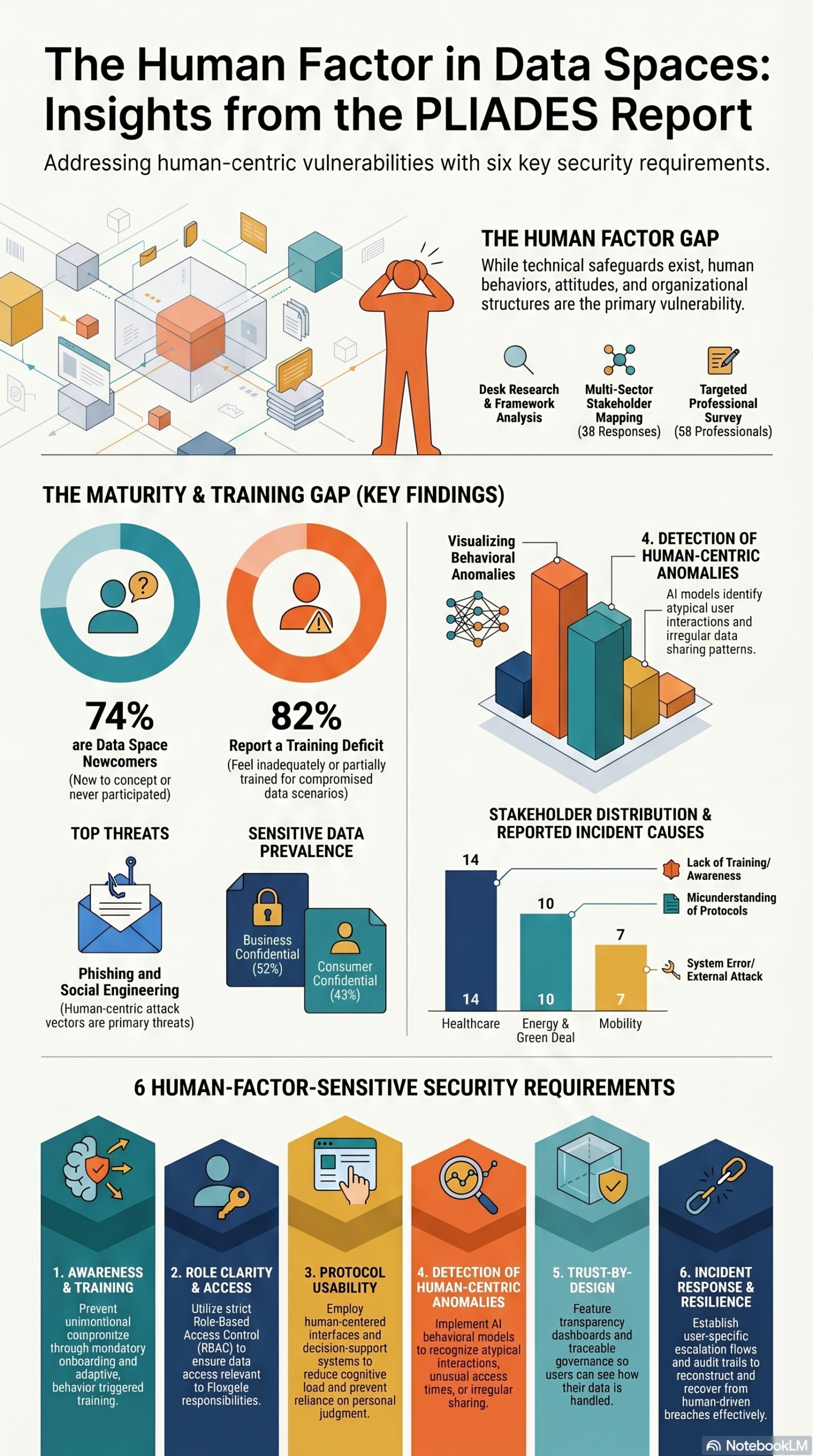
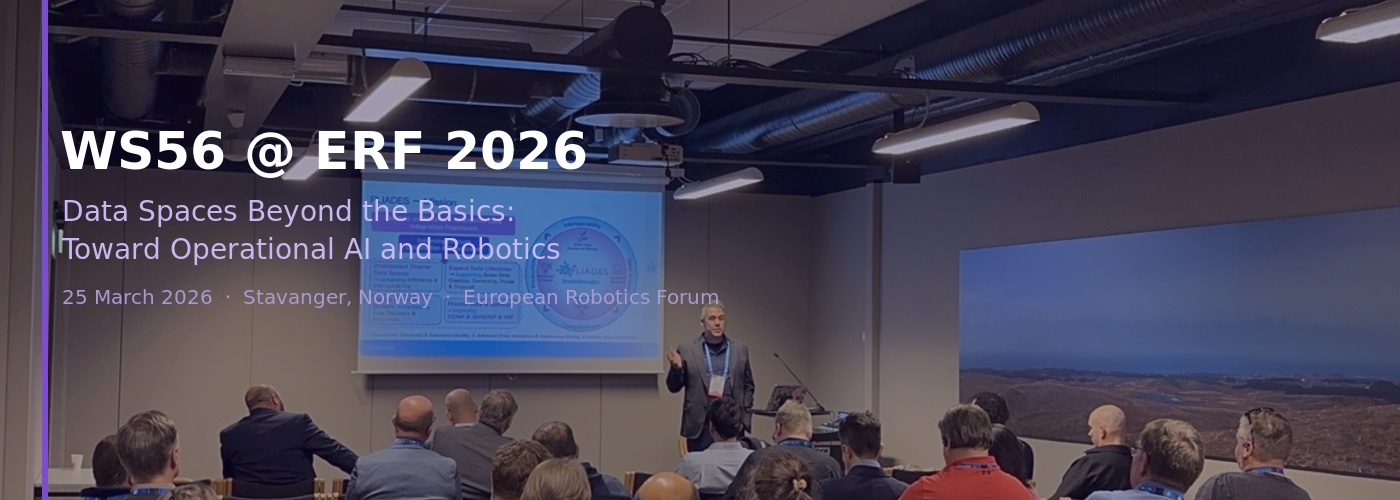
As AI-enabled data spaces continue to evolve across critical sectors such as healthcare, mobility, manufacturing, and energy, ensuring that these systems remain trustworthy, human-centric, and rights-respecting has become increasingly important.
To support this objective, White Research (WR), within the framework of the PLIADES project, organized two interactive reflection workshops focused on the ethical, societal, and human dimensions of AI systems and data spaces that took place online the 22nd and 23rd April. The sessions brought together project partners with the aim to explore how emerging AI technologies may affect fundamental rights, human oversight, inclusion, and societal resilience. These sessions are part of the training programme that started with the introductory training “Ethics and Gender Biases in AI”, organized in the project meeting in Prague, May 2025.
From regulation to real-world reflection
The first workshop, “AI and Fundamental Rights”, introduced participants to the logic and structure of the EU AI Act and explored how AI systems can impact rights such as privacy, transparency, non-discrimination, and fair working conditions. Participants were also introduced to the concept of the Fundamental Rights Impact Assessment (FRIA) and its role in identifying and mitigating risks in high-risk AI systems.
Building on this foundation, the second workshop, “Human Oversight, Societal Impact, and Inclusion in AI”, shifted the discussion toward the practical implementation of trustworthy AI. The session focused on meaningful human oversight, societal impacts, diversity and inclusion considerations, and the challenges of ensuring effective human control in increasingly automated environments.
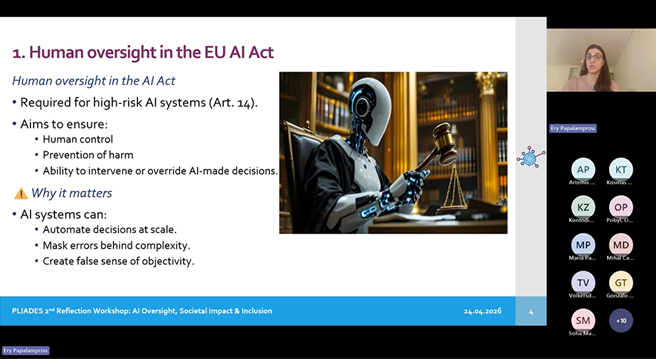
Together, the two workshops formed a complementary training programme designed to help participants move beyond theoretical compliance and engage critically with the real-world implications of AI deployment in data spaces.
A practical and interactive training approach
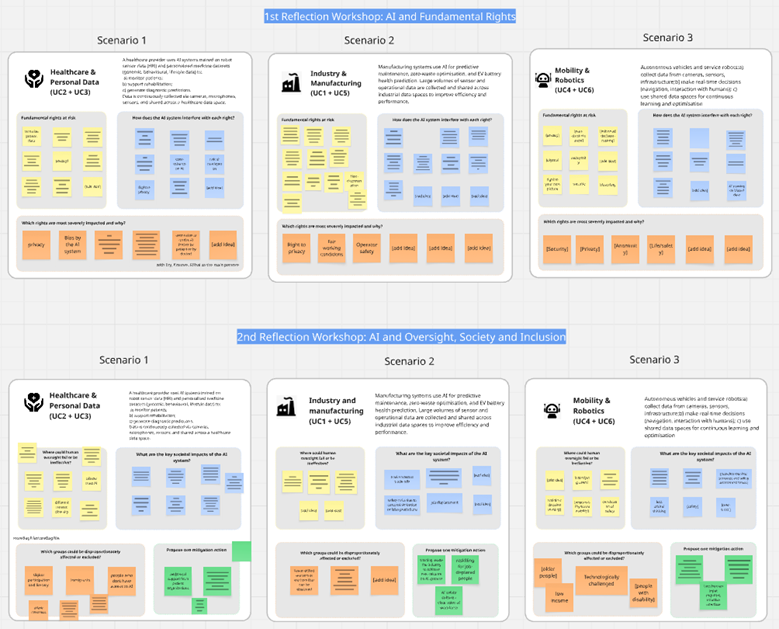
Both workshops combined short theoretical presentations with collaborative breakout exercises inspired by the PLIADES use cases. Participants worked in groups to identify ethical risks, discuss vulnerable groups affected, assess societal impacts, and propose mitigation measures for AI systems in healthcare, manufacturing, mobility, and robotics contexts.
This interactive format encouraged participants to reflect not only on technical risks, but also on organizational, behavioural, and societal dimensions that are often overlooked in AI development (Miro boards presented below).
Key insights from the discussions
Several common themes emerged across both workshops:
- Privacy remains a central concern: Across all breakout groups and sectors, participants consistently identified privacy and data protection as among the most impacted rights in AI-enabled environments. Concerns included sensitive patient data in healthcare, monitoring and surveillance in workplace settings, and data security within mobility systems.
- Human oversight must be meaningful: It was emphasized that human oversight cannot be reduced to a superficial “human-in-the-loop” checkbox. Effective oversight requires users to understand AI outputs, retain the ability to intervene, and avoid over-reliance on automated recommendations, especially in high-pressure environments.
- Inclusion and diversity are essential: The discussions highlighted the risks of designing AI systems around “average” users while overlooking minority populations or people in vulnerable situations. Participants stressed the importance of diverse datasets, inclusive testing practices, and accessibility considerations, particularly for older adults, people with disabilities, and other underrepresented groups.
- AI Impacts extend beyond technical Systems: Another important insight was that AI systems reshape organizational processes, working conditions, and societal dynamics. In manufacturing contexts, for example, participants discussed concerns related to worker displacement, over-reliance on automation, and the need to foster an “AI safety culture” where employees feel empowered to report malfunctions or concerns.
Towards Human-centric and Trustworthy Data Spaces
The workshops demonstrated the importance of embedding ethical reflection directly into the design, deployment, and governance of AI-enabled data spaces. Rather than treating ethics and fundamental rights as purely compliance-driven exercises, participants were encouraged to approach them as practical tools for building trustworthy, inclusive, and resilient systems.
By facilitating these discussions, PLIADES contributes to strengthening awareness and ethical readiness across sectors that increasingly rely on secure and interoperable data-sharing ecosystems.
Stay tuned for more updates and dissemination activities from the PLIADES project as it continues advancing human-centric and trustworthy European data spaces.